Turning a museum website into a game Gen Z actually wants to play
A 16-week research sprint with the National Gallery of Art led to Art or Fart, a playful, competitive art game built to make museum visits feel like something worth sharing, not just something to schedule.
View the prototype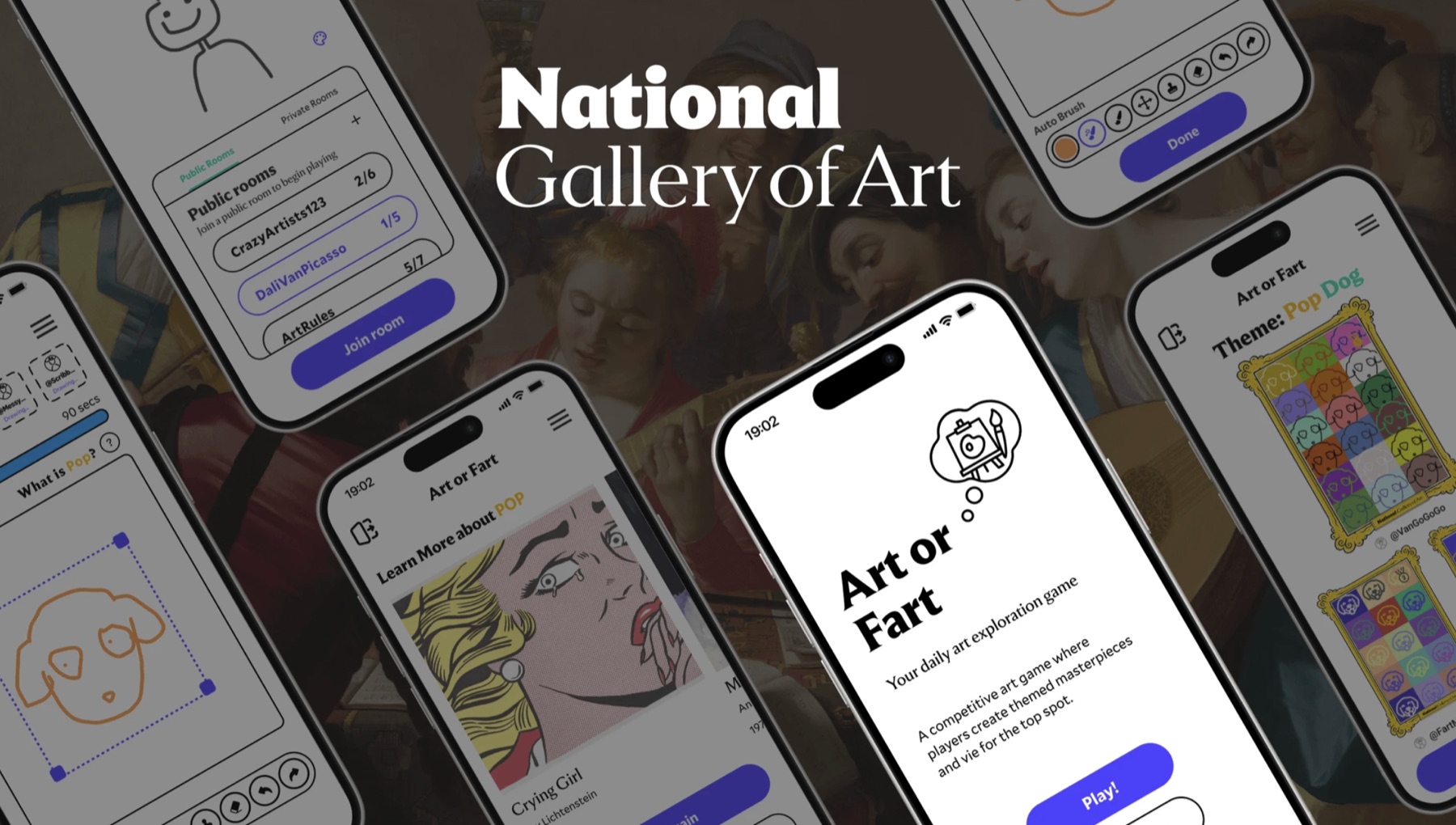
The challenge: a Gen Z audience that isn't showing up online
The National Gallery of Art draws millions of in-person visitors every year, but its digital platform wasn't reaching a younger audience. The Gallery wanted a way to build trust with Gen Z that felt playful rather than instructional, without losing the credibility of a national institution.
We framed the brief around three questions that shaped everything that followed:
- How do we draw Gen Z to the platform in the first place?
- How do we keep "fun seekers" engaged once they're there, rather than a one-time visit?
- How do we stay playful without undermining the Gallery's institutional voice?
Research: listening before we designed anything
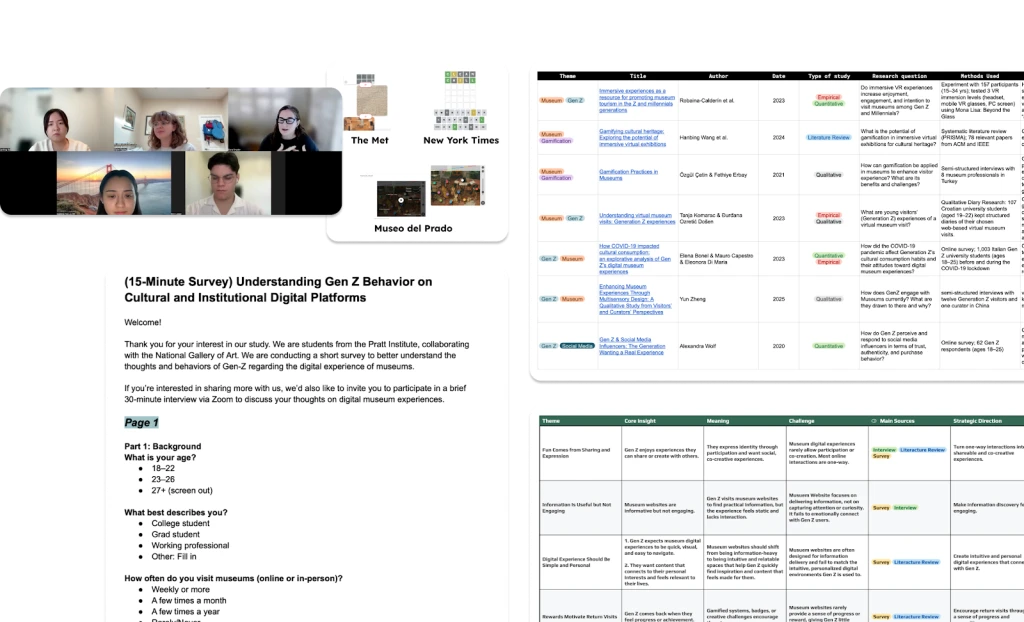
Rather than assume what Gen Z wanted from a museum, we ran four parallel research tracks to find out.
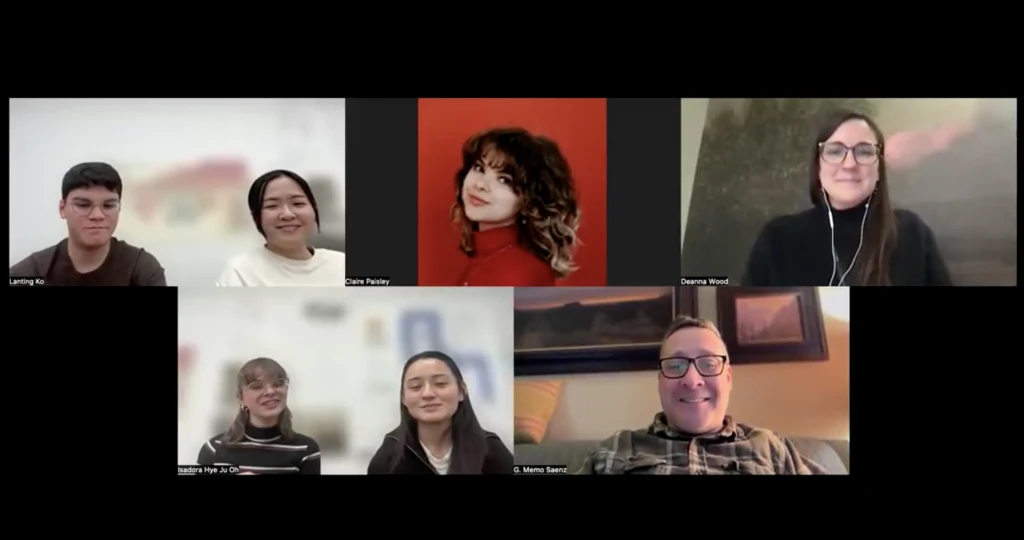
- Generative interviews with five Gen Z museum visitors and one museum professional.
- Competitive analysis of The Met, Museo del Prado, and The New York Times' digital experiences.
- A Gen Z museum-visitor survey on how and why they engage with cultural institutions online.
- Desk research into broader Gen Z cultural and social media behavior.
What we learned: fun is a social tool
Three insights redirected our whole strategy:
- Fun is a social tool. Gen Z shares things to connect with friends, not just for their own entertainment. A museum experience needed to be worth sending to someone.
- Museum sites get used transactionally. Visitors were going to institutional sites for hours, tickets, and directions, not to explore. Exploration was happening elsewhere.
- Show up where they already are, instead of asking them to come to you. If exploration wasn't happening on museum websites, we needed to meet that behavior on its own terms.
Five ideas before the right one
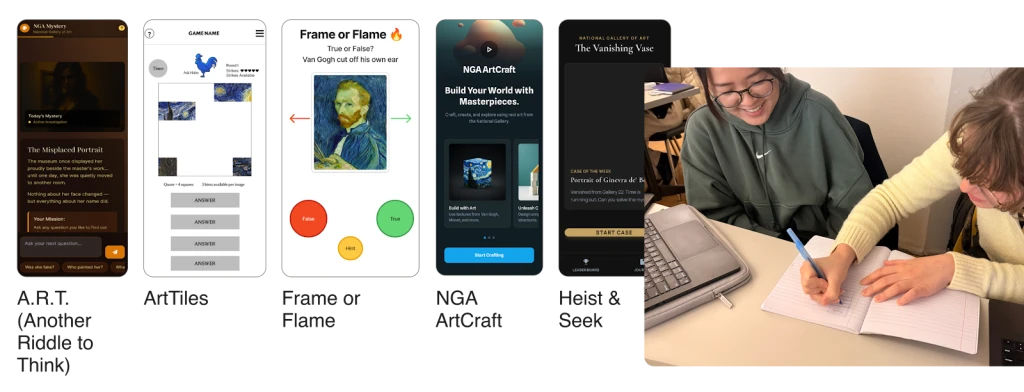
We prototyped five directions before finding the one that actually worked: A.R.T. (Another Riddle to Think), ArtTiles, Frame or Flame, NGA ArtCraft, and Heist & Seek.
Each concept was fun on its own, but none of them had the instant, competitive, social dynamic our research told us Gen Z actually responds to. They were things you'd do once, alone, not something you'd come back to with friends.
The pivot: introducing Art or Fart
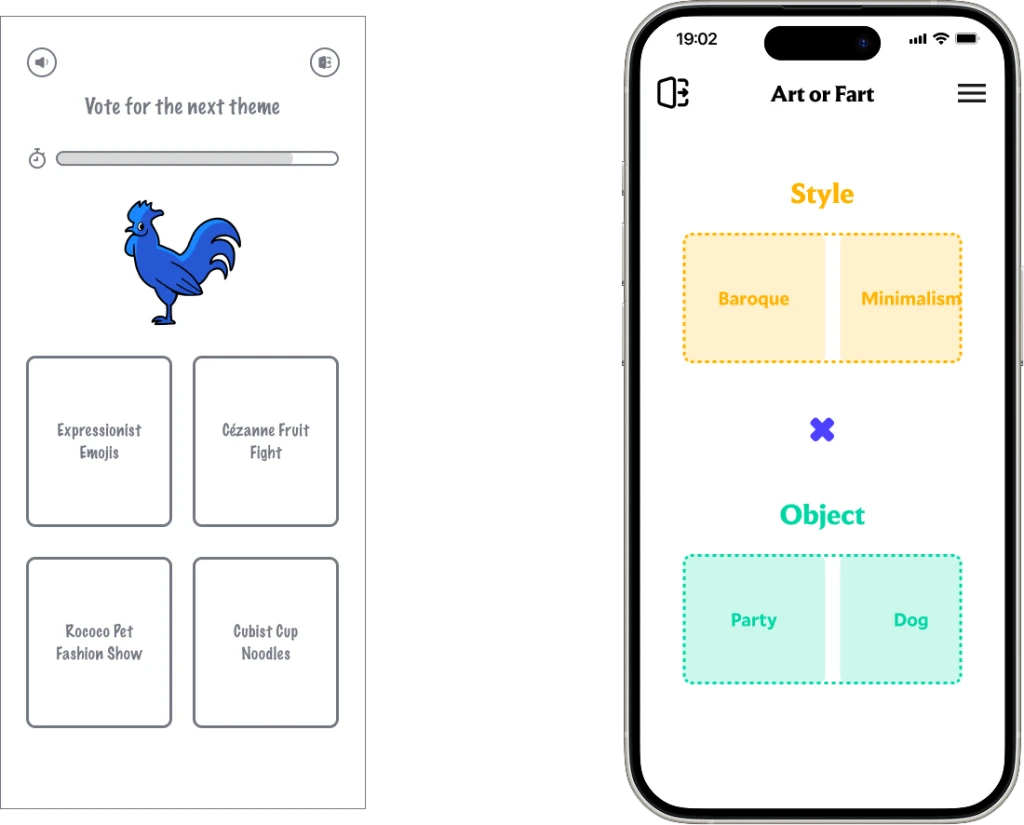
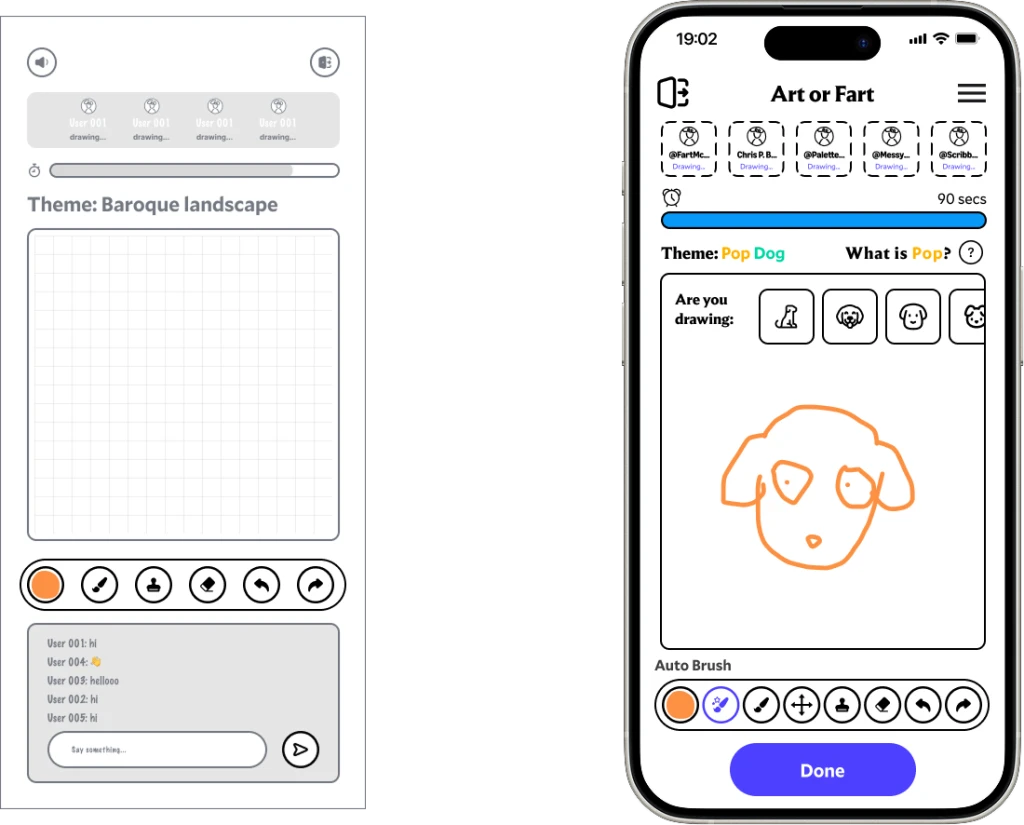
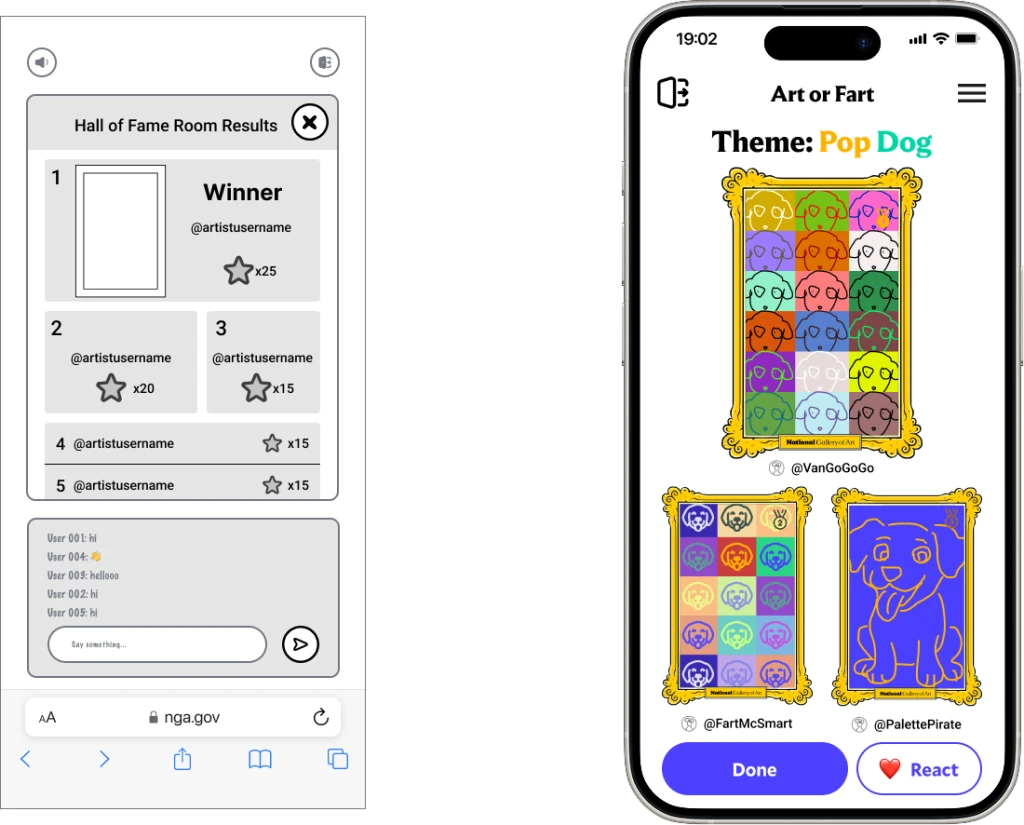
Art or Fart is a weekly, multiplayer, timed art challenge. Every round, players get a themed prompt pulled from a current NGA exhibit, race the clock to paint it, then vote on each other's submissions runway-style and climb a leaderboard.
It borrows the loop that already works for Gen Z on TikTok and Roblox: low-pressure, expressive, and built to be shared, while every theme quietly ties back to real work in the Gallery's collection.
Designing through constraints
Every core feature came out of a real limitation we had to design around, not a feature we added for its own sake.
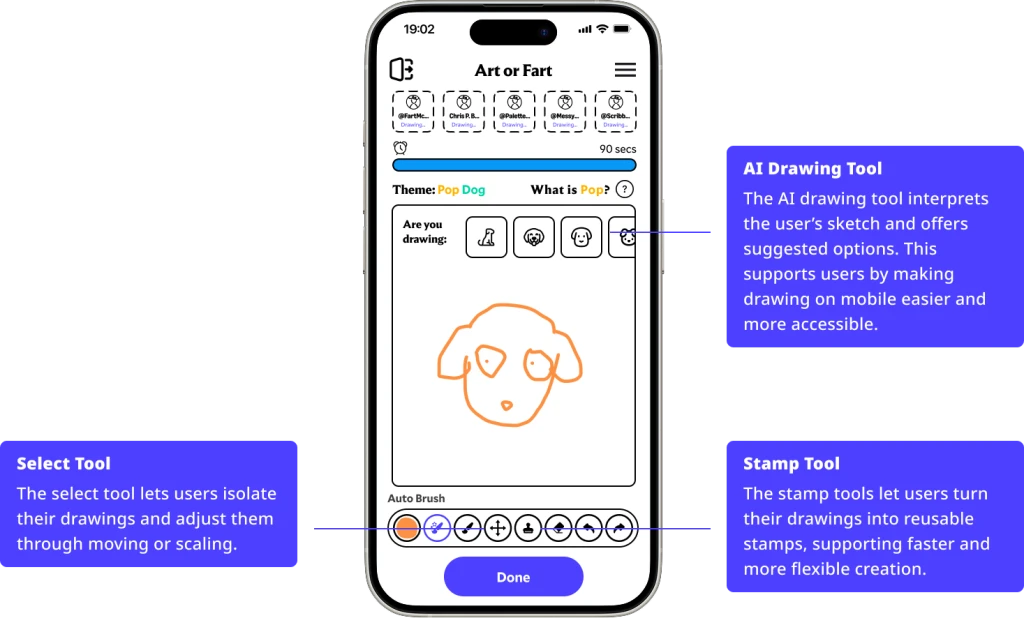
Drawing on a phone is hard
Freehand drawing on a small touchscreen is frustrating for most people, and that friction would have killed the game before it started. We added an AI-assisted Auto Brush that interprets a rough sketch and offers cleaner options in real time, making creation accessible without taking the "art" out of it.
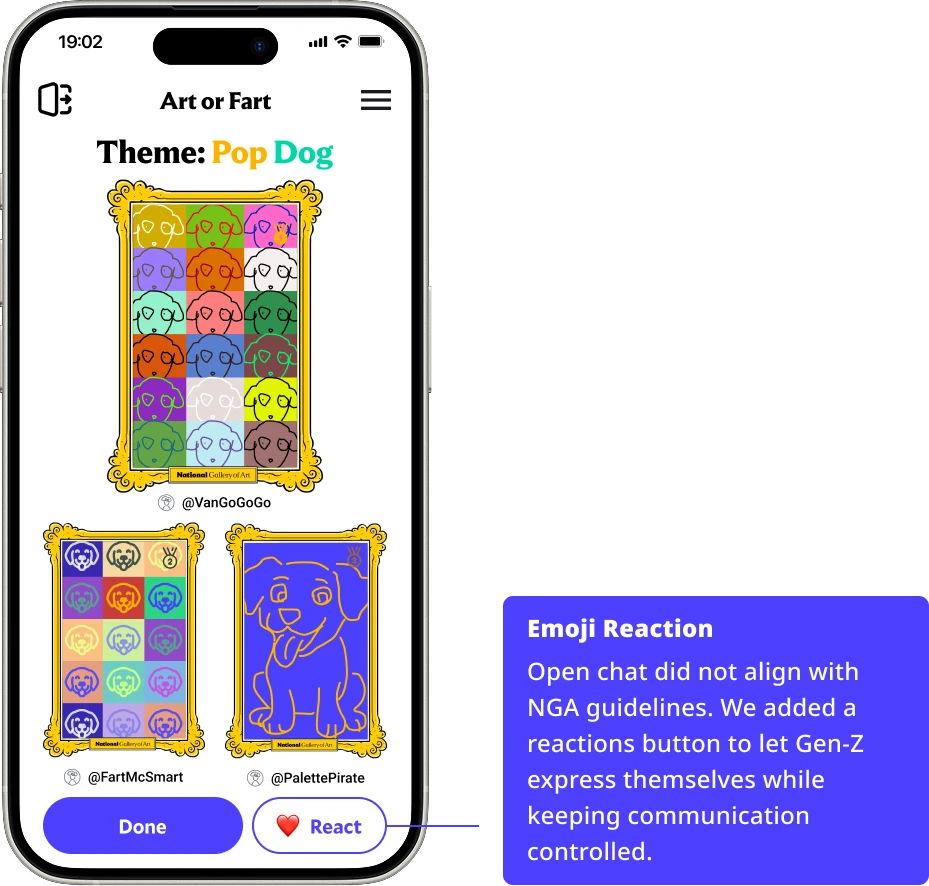
The institution needed a voice it could trust
Open text chat didn't align with NGA's guidelines for a public-facing product: there was too much risk in giving strangers an unmoderated channel. We replaced it with a reactions button, so players could still express themselves in the moment without the Gallery losing control of its voice.
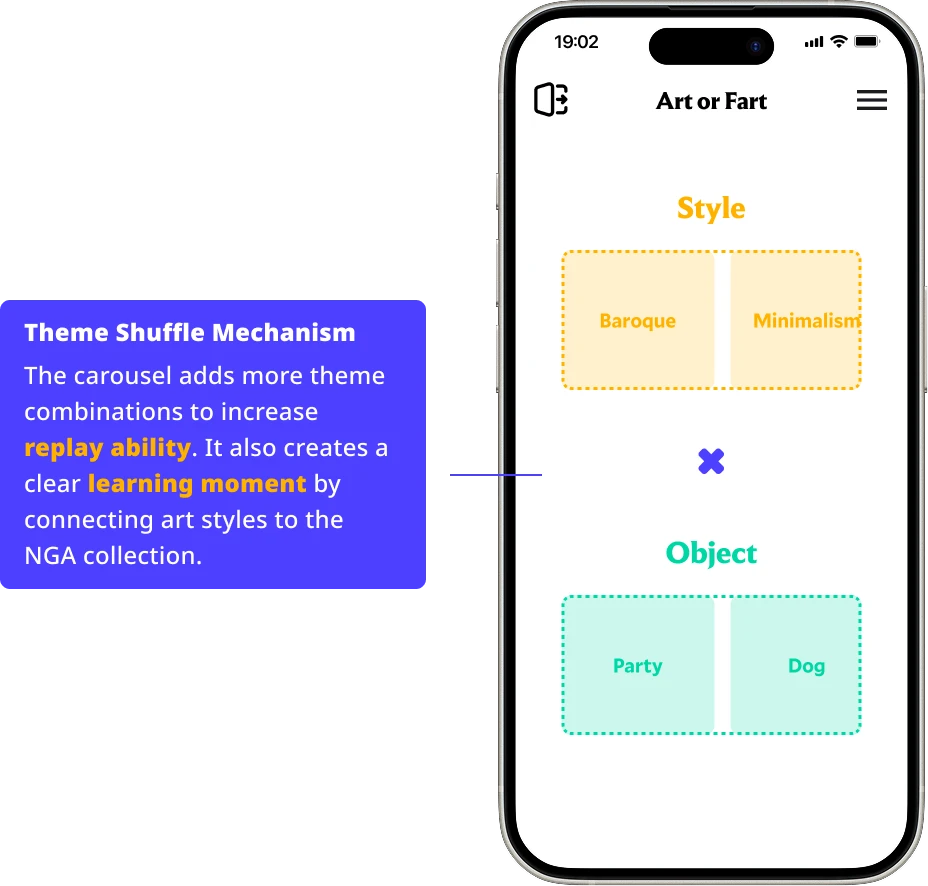
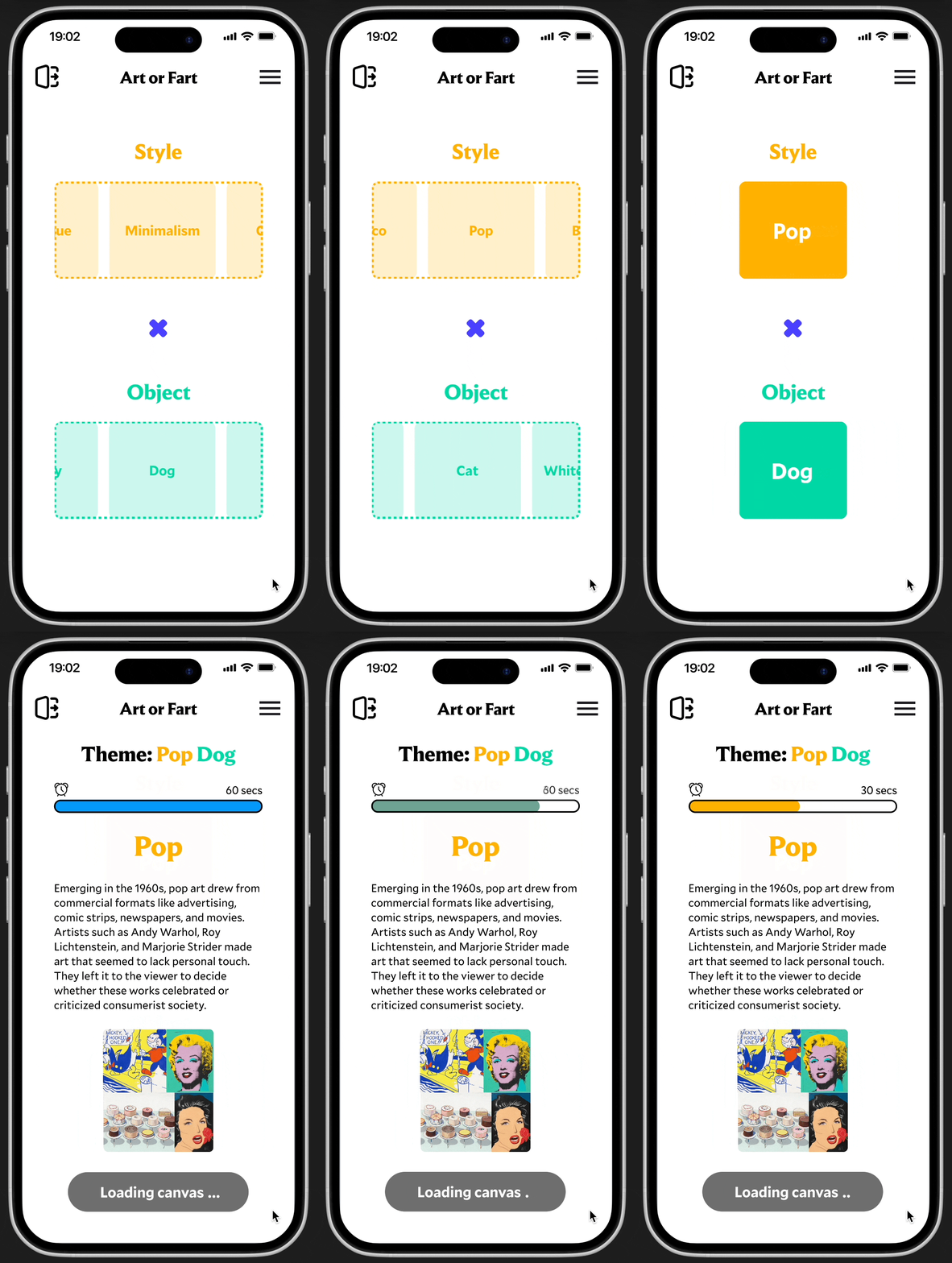
One theme gets old fast
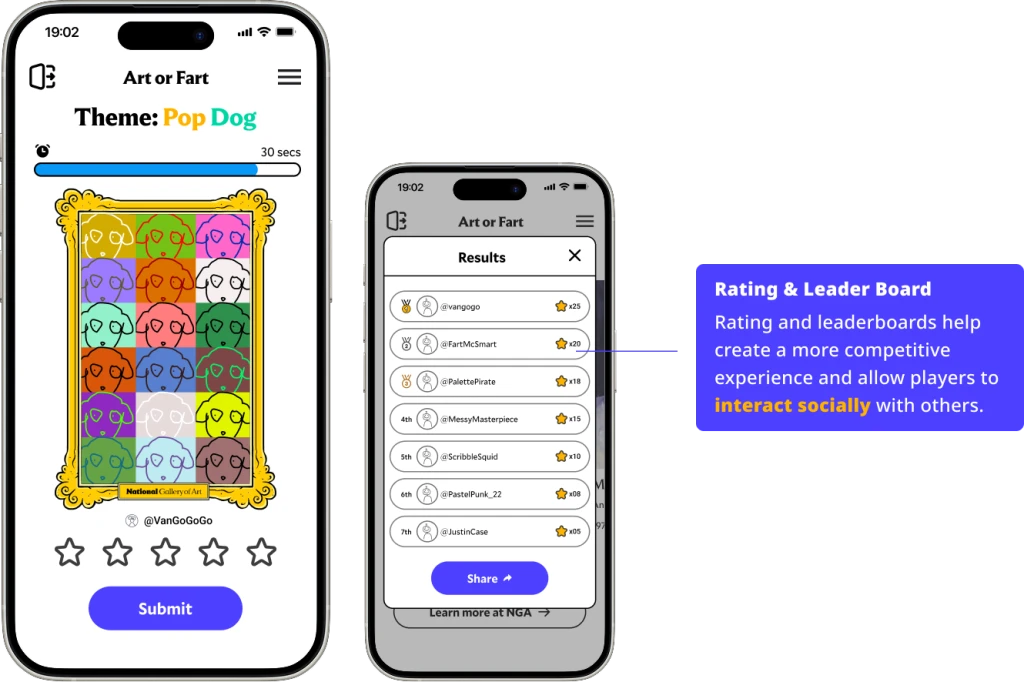
A single weekly prompt wasn't going to hold anyone's attention for long. We built a shuffleable carousel that combines an art style with an object, like Baroque × Dog or Minimalism × Party, so the same mechanic keeps generating new combinations, and each pairing becomes a small, memorable lesson connecting an art style back to the collection.
Competition needed real stakes
Without a way to keep score, "competitive" was just a word. Star ratings and a weekly leaderboard give every round a clear winner and a reason to come back, turning a one-off doodle into an ongoing, social competition.
Not everyone wants to play with strangers
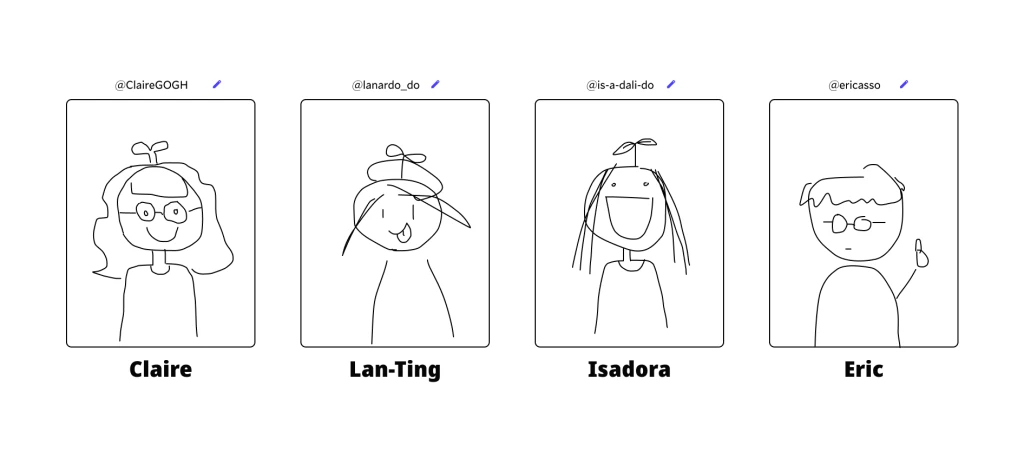
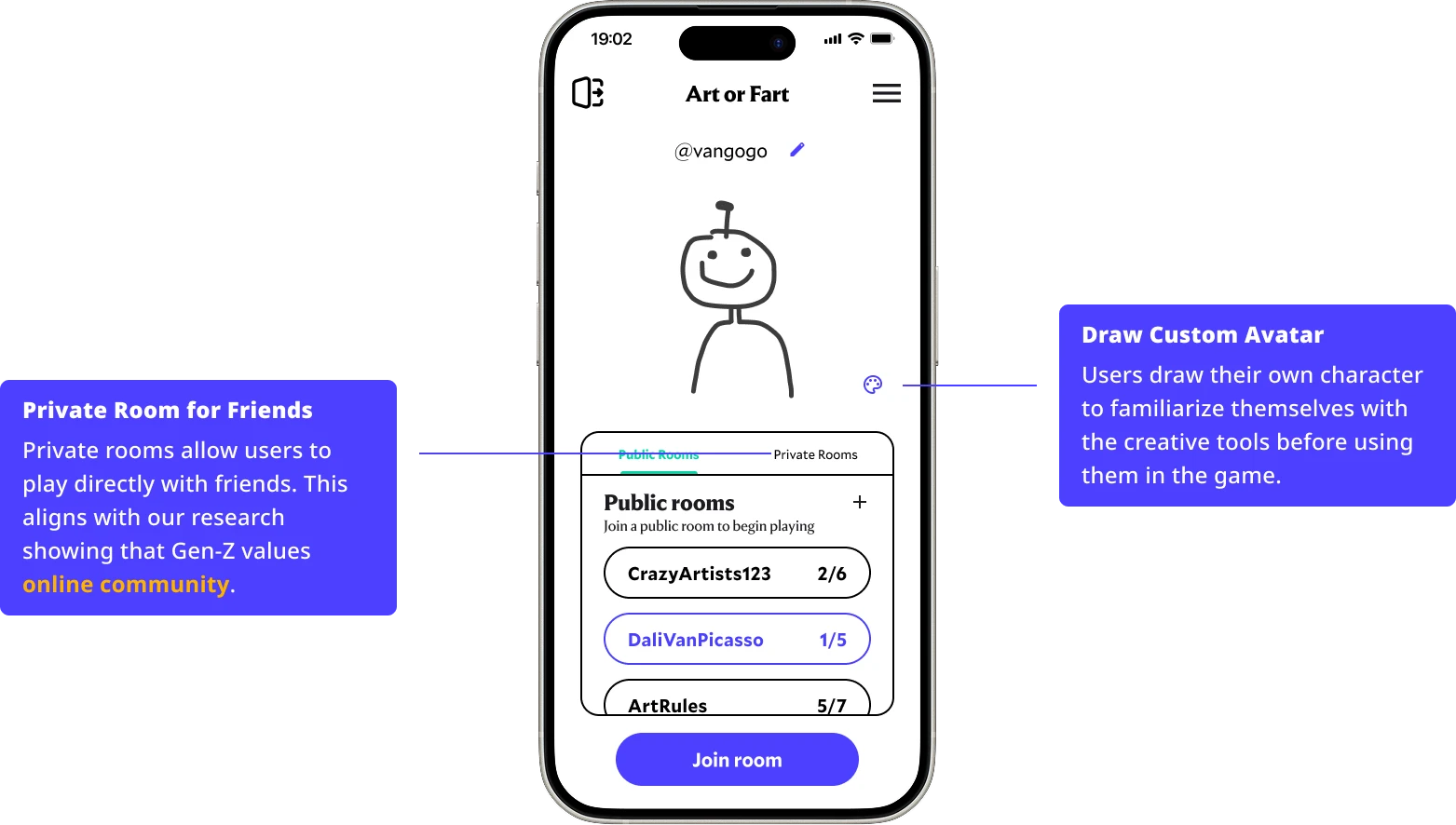
Our research showed Gen Z values online community, but that doesn't always mean a public room full of strangers. Private rooms let players invite friends directly, and a custom hand-drawn avatar gives everyone a low-stakes way to try the drawing tools before a round even starts.
The outcome
We presented Art or Fart back to the Gallery as a concept that could realistically sit alongside their existing digital products, not replace them.
"I can see this easily fitting in to our portfolio of products."
Feedback from our National Gallery of Art stakeholders
What's next
- Build a full working prototype beyond the current click-through version.
- Expand the theme catalogue so the style-and-object carousel keeps surprising returning players.
- Add a "Learn More" link on every theme, connecting gameplay straight back to the real piece in the collection that inspired it.
Thanks for reading!
Four of us worked on this together at Pratt Institute. We even drew ourselves in-game to test the avatar tool we designed.